
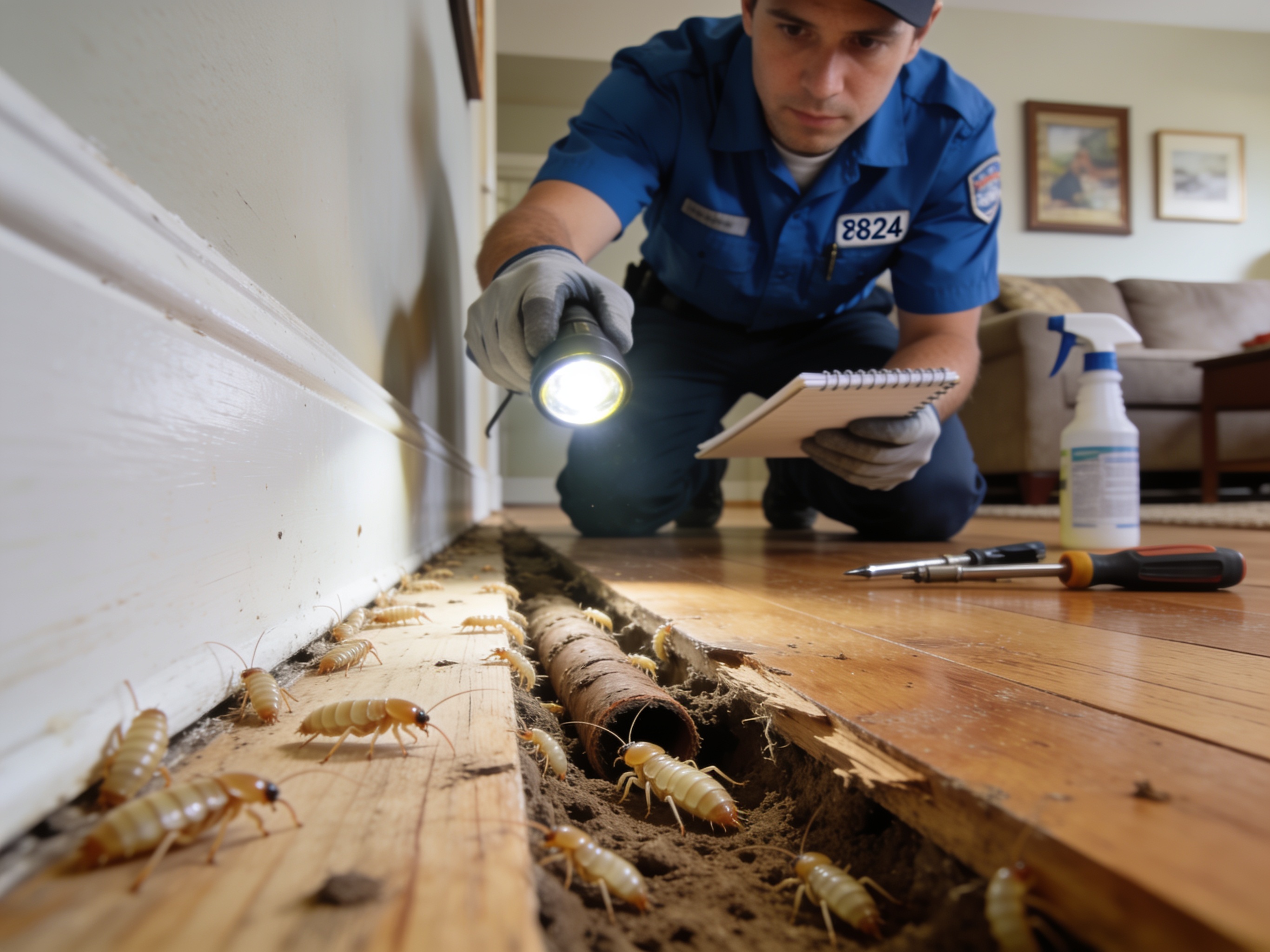
Homes in San Antonio 78254 often sit on clay-rich soils that hold moisture after heavy rains, creating pathways for subterranean termites to reach slab foundations and enter through expansion joints or utility penetrations. Older homes in the area may have pier-and-beam construction with crawl spaces that stay damp, while newer builds can still see issues where irrigation systems keep soil against the stem wall. Drywood termites appear less often but show up in attics or wall voids when wood is brought in already infested. Effective treatment requires identifying the exact entry points rather than blanket spraying.
Standard liquid termiticides applied around the perimeter work when the soil barrier remains intact, but in 78254 neighborhoods the frequent summer thunderstorms can erode that barrier over time. Bait stations placed in the yard monitor activity and provide colony control without relying solely on a continuous chemical zone. Inside the house, spot treatments target active galleries in baseboards or door frames while avoiding unnecessary drilling into finished surfaces. Homeowners sometimes mistake mud tubes along baseboards for harmless debris, delaying action until structural wood shows damage.
After treatment, follow-up inspections at three and six months confirm whether activity has stopped. Re-treatment is scheduled only when live termites or fresh mud tubes reappear rather than on a fixed calendar. Moisture issues from leaking irrigation or poor grading around the house are addressed at the same time because termites return quickly when water sources remain available. This approach keeps the work focused on the actual conditions found at each property on Honiley Street and surrounding streets.
Technician insight
In San Antonio 78254, the thing that catches most people out with termites in house is how quickly irrigation overspray keeps the soil against the foundation wet during our long summers. Clay soils here hold that moisture right up to the slab edge, letting subterranean termites bypass a perimeter treatment that worked fine the year before. Checking the grading and sprinkler heads during every inspection prevents repeat calls.
Baseboard activity in a 78254 slab home
Homeowner noticed small mud tubes along baseboards after a week of rain. Inspection found foraging tubes entering through an unsealed plumbing penetration. We applied targeted liquid treatment at the foundation and installed two bait stations on the east side of the lot. Follow-up visits showed no new activity and the tubes dried out.
Termites in House Services We Offer
✓Subterranean Termite Perimeter Treatment
Liquid termiticide applied to soil around the foundation to create a barrier that stops foraging termites from entering the house through slab edges.
✓Drywood Termite Spot Treatment
Localized application of wood-treatment products directly into active galleries found in baseboards, window frames, and attic timbers without full-structure fumigation.
✓Termite Bait Station Installation
In-ground stations placed around the yard that monitor and deliver slow-acting bait to colonies before they reach the interior of the home.
✓Crawl Space Termite Inspection
Detailed check of pier-and-beam homes common in parts of 78254 for mud tubes, damaged joists, and moisture conditions that support termite activity.
✓Foundation Joint Sealing
Filling expansion joints and utility entry points with termite-resistant material to reduce hidden access routes into living spaces.
Termites in House Cost in San Antonio 78254, TX
| Service | Typical Range | What Affects It |
|---|---|---|
| Initial Termite Inspection | $75–$150 | Higher end for larger homes or crawl-space access |
| Perimeter Liquid Treatment | $600–$1,200 | Varies with lot size and soil conditions |
| Bait Station System | $800–$1,500 | Includes initial install and first-year monitoring |
| Drywood Spot Treatment | $250–$600 | Depends on number of active areas found |
Ranges are typical for San Antonio 78254, TX and confirmed with an exact written quote before any work starts.
How it works
- 1
On-Site Inspection
We examine the interior and exterior of the home, checking for mud tubes, damaged wood, and moisture sources around the 78254 property.
- 2
Treatment Plan
A targeted approach is selected based on whether activity is subterranean or drywood and whether the home has a slab or crawl space.
- 3
Application and Monitoring
Products are applied and bait stations or monitoring points are installed, followed by scheduled checks at three and six months.
- 4
Prevention Recommendations
Grading, irrigation adjustments, and wood-to-soil clearance fixes are noted to reduce future risk in the local climate.
Pricing
Upfront quotes based on home size, construction type, and extent of activity; no fixed annual contracts required.