
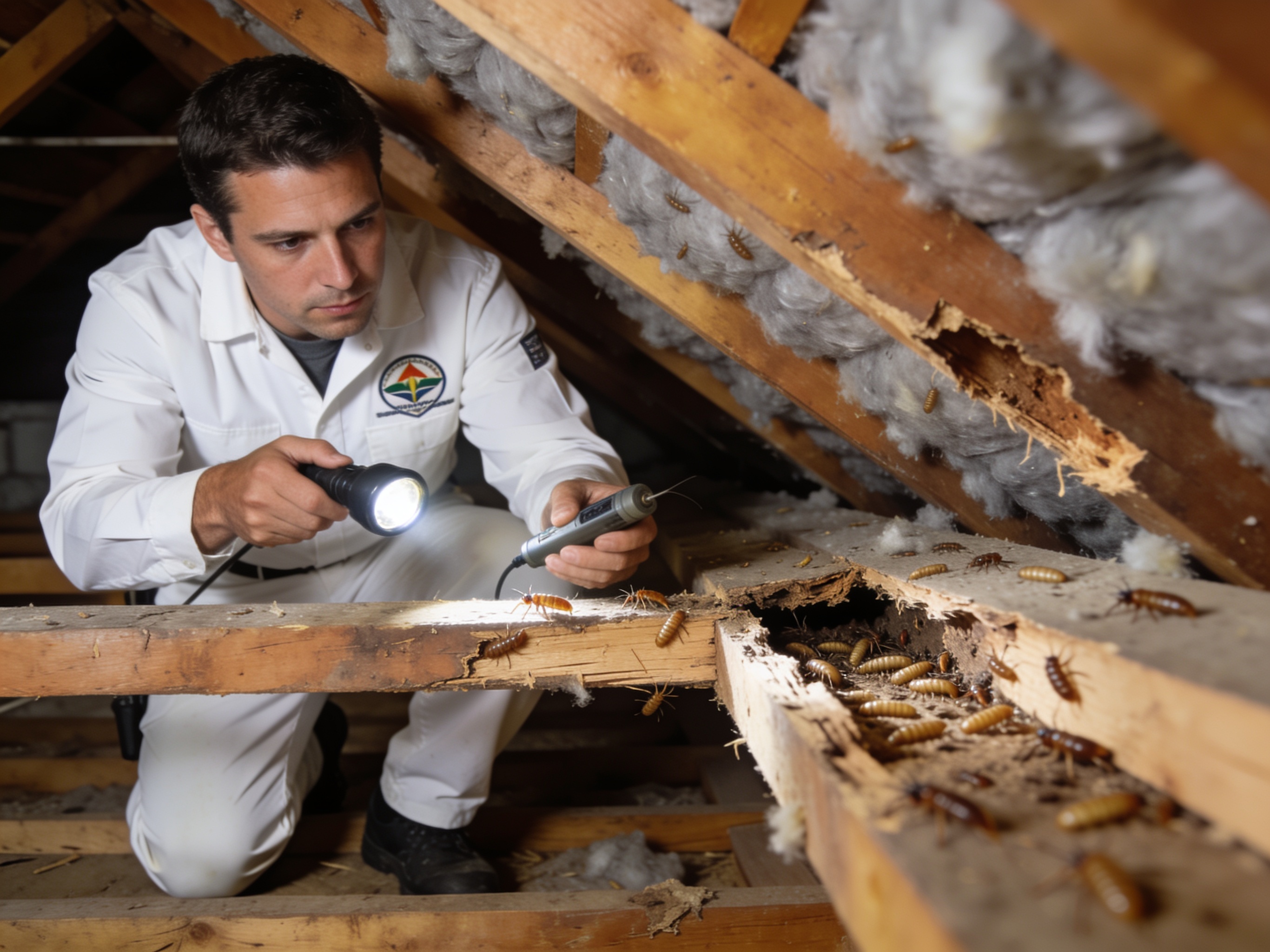
Homes in San Antonio 78254 often feature older wood trusses and rafters that provide easy pathways for drywood termites once they enter through roof vents or soffits. High summer humidity combined with occasional heavy rains allows colonies to expand quickly in the enclosed attic environment where moisture can linger in insulation and around plumbing stacks. Technicians must remove sections of insulation to reach galleries without creating new entry points that could allow moisture back in during the next storm season.
Edge cases include mixed infestations where subterranean termites travel up from the slab through wall voids and meet drywood activity already established in the attic sheathing. Treatment plans adjust based on whether the home has blown-in cellulose or fiberglass batts, since the former can hide frass and require full removal before any residual dust application. Local building practices around roof penetrations for HVAC lines also create recurring access points that need sealing after treatment to prevent re-entry.
Code considerations in Bexar County require maintaining attic ventilation rates, so any foam or dust application must avoid blocking soffit or ridge vents. Homeowners frequently overlook small kick-out flashings around chimneys that allow water intrusion and soften wood, giving termites an ongoing food source. Thorough mapping of active galleries before treatment prevents unnecessary disturbance of inactive areas that could stir up settled dust during later renovations.
Technician insight
In San Antonio 78254 the thing that catches most people out with Termites in Attic is the combination of older cedar-shake or composition roofs and the way summer humidity gets trapped under ridge vents. Homeowners often treat the visible frass on the attic floor but miss the colonies still active inside the top plates where the roof meets the exterior walls.
Leon Valley Attic Drywood Find
A homeowner in a 1980s single-story near 78254 noticed small piles of frass near the HVAC platform. Inspection revealed drywood galleries running along several rafters where roof leaks had softened the wood. Treatment focused on direct injection into the active sections plus sealing of two soffit vents that had lost their screens. Follow-up confirmed no new activity and the insulation was left intact.
Termites in Attic Services We Offer
✓Drywood Termite Gallery Treatment
Direct injection of termiticide into visible galleries within attic rafters and sheathing to eliminate established drywood colonies without full-structure fumigation.
✓Attic Insulation Removal and Replacement
Safe extraction of infested insulation followed by installation of new material rated for the local climate to restore R-value after termite activity is cleared.
✓Roof Vent and Soffit Sealing
Installation of fine-mesh barriers and caulking around attic entry points to block future drywood termite access while preserving required airflow.
✓Subterranean Termite Attic Monitoring
Placement of bait stations and moisture probes in attic spaces connected to ground-level activity to intercept colonies traveling upward through wall voids.
✓Wood Member Spot Treatment
Application of borate-based products to exposed rafters and collar ties in areas showing early frass or kick holes before colonies expand further.
Termites in Attic Cost in San Antonio 78254, TX
| Service | Typical Range | What Affects It |
|---|---|---|
| Attic Inspection and Mapping | $150–$275 | Higher end applies when insulation must be disturbed for full access. |
| Drywood Gallery Treatment | $400–$850 | Depends on number of active galleries and whether insulation removal is required. |
| Soffit and Vent Sealing | $200–$450 | Varies with roof pitch and number of penetrations in 78254 homes. |
| Insulation Removal and Replacement | $600–$1,400 | Driven by attic square footage and type of replacement material selected. |
Ranges are typical for San Antonio 78254, TX and confirmed with an exact written quote before any work starts.
How it works
- 1
Detailed Attic Mapping
Technician accesses the attic through the scuttle or exterior hatch and marks all active galleries, moisture stains, and entry points using inspection lights and moisture meters.
- 2
Targeted Application
Selected termiticide or dust is applied directly into galleries and along structural members while protecting insulation and electrical components from overspray.
- 3
Entry Point Sealing
Vents, soffits, and roof penetrations are sealed with mesh and caulk rated for San Antonio temperature swings to reduce future access.
- 4
Follow-Up Inspection
Return visit after 30 days confirms no new frass or activity and verifies that insulation replacement meets local energy code requirements.
Pricing
Pricing varies by attic size, insulation type, and whether both drywood and subterranean activity are present.