
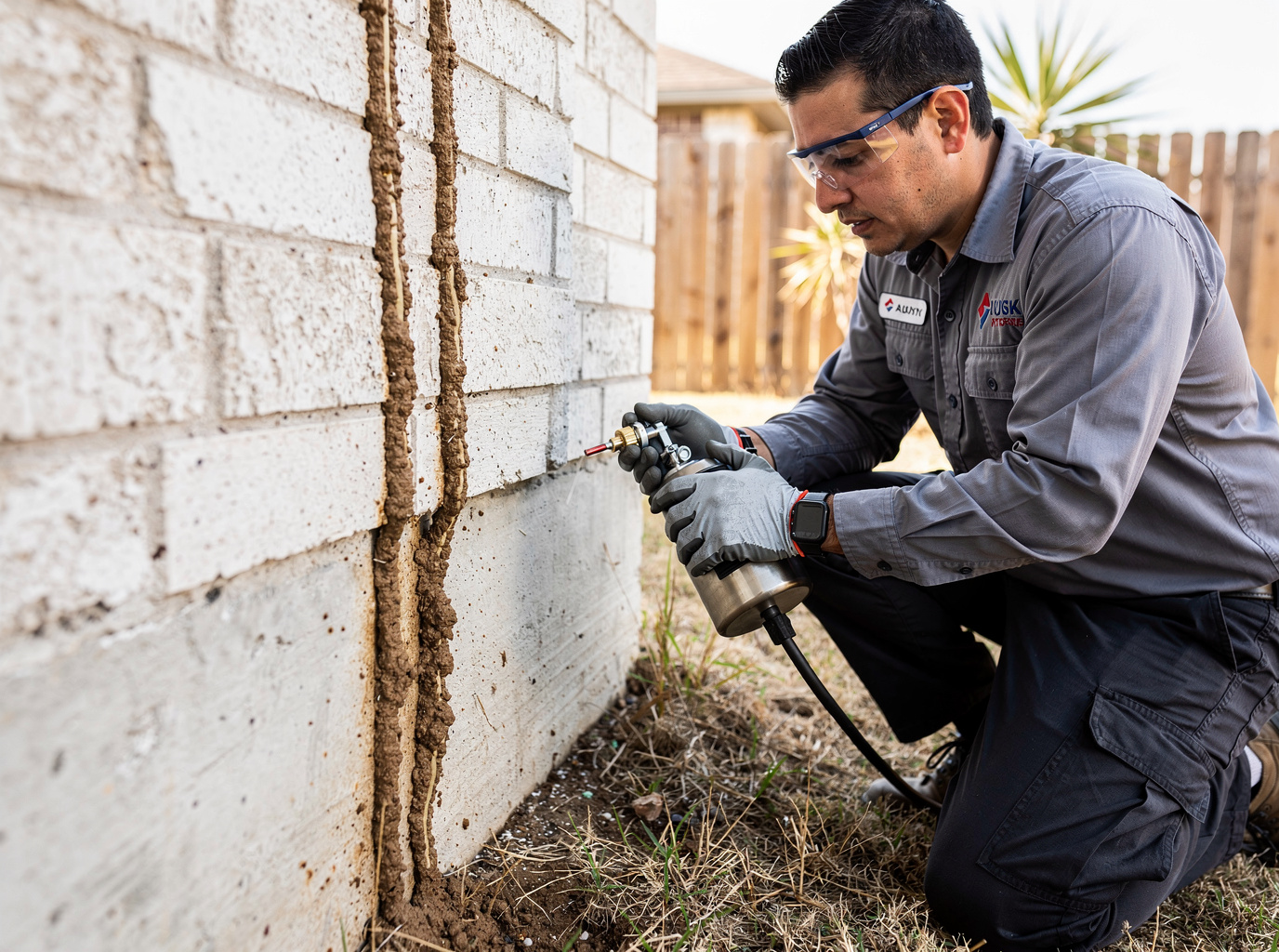
In San Antonio 78254, subterranean termites build mud tubes along slab edges and expansion joints after spring rains soak the clay-heavy soil. These tubes protect worker termites traveling from the ground to wooden framing, especially in homes built before 1990 that lack full termite shields. Technicians trace tubes back to entry points around plumbing penetrations and porch attachments, then apply non-repellent termiticide directly into the soil gallery rather than just scraping the surface.
Edge cases appear when tubes run behind stucco or through weep holes in brick veneer common on streets off Culebra Road. Breaking the tube without treating the source lets the colony rebuild within weeks. Crews use a combination of foam and liquid applications to reach voids under the slab, then install monitoring stations along the perimeter to confirm colony decline before any wood repair begins.
Texas regulations require that any treatment around occupied structures follow label rates for the product chosen, and homeowners should expect a written graph showing where product was placed. Skipping the follow-up inspection often leaves satellite colonies active in fence posts or tree stumps within 50 feet of the house, which is frequent in 78254 lots with mature live oaks.
Technician insight
In San Antonio 78254 the thing that catches most people out with termite mud tubes is how quickly they reappear after a summer thunderstorm once the clay soil cracks and lets new foragers reach the slab edge again.
Fresh tubes after July storms on Honiley Street
Homeowner noticed pencil-thick tubes along the back porch slab two days after heavy rain. Inspection found live workers traveling from a cracked expansion joint near the AC condensate line. Treatment focused on that single entry point with foam and liquid, tubes were removed, and stations were set. No new activity appeared at the 30-day check.
Termite Mud Tubes Services We Offer
✓Mud Tube Mapping and Documentation
Technicians photograph and diagram every tube found along the foundation, noting entry points near utility lines for targeted follow-up treatment.
✓Active Mud Tube Treatment
Non-repellent termiticide is injected into soil galleries connected to live tubes, stopping worker traffic without driving the colony deeper under the slab.
✓Tube Removal and Surface Cleaning
Tubes are scraped and the foundation is washed so new construction is visible during the 30-day re-inspection required in Bexar County.
✓Perimeter Monitoring Station Installation
Stations are placed every 10 to 15 feet around the home to track whether the original colony or new foragers return after the initial treatment.
✓Post-Rain Mud Tube Re-Check
A second visit after heavy rainfall checks for fresh tubes that often appear once soil moisture rises again in northwest San Antonio.
Termite Mud Tubes Cost in San Antonio 78254, TX
| Service | Typical Range | What Affects It |
|---|---|---|
| Single active mud tube treatment | $225–$375 | Price rises if tubes appear on multiple sides of the house or near plumbing stacks. |
| Mud tube mapping plus treatment | $300–$450 | Includes documentation and two monitoring stations. |
| Follow-up re-inspection after rain | $125–$175 | Often waived if performed within the first 30 days. |
Ranges are typical for San Antonio 78254, TX and confirmed with an exact written quote before any work starts.
How it works
- 1
Initial Site Walk
Technician inspects the full perimeter, including attached garages and porches, looking for tubes on both slab and pier-and-beam sections common in 78254.
- 2
Tube Verification
Live activity is confirmed by gently breaking a section of tube and watching for worker movement before any product is applied.
- 3
Targeted Soil Treatment
Product is applied into trenches or drilled holes at active entry points rather than a full perimeter spray unless multiple colonies are present.
- 4
Cleanup and Documentation
Tubes are removed, photos are taken, and a treatment diagram is left with the homeowner for future reference.
Pricing
Most mud tube jobs in 78254 fall into a moderate range because treatment is localized rather than a full-structure drill-and-treat.